
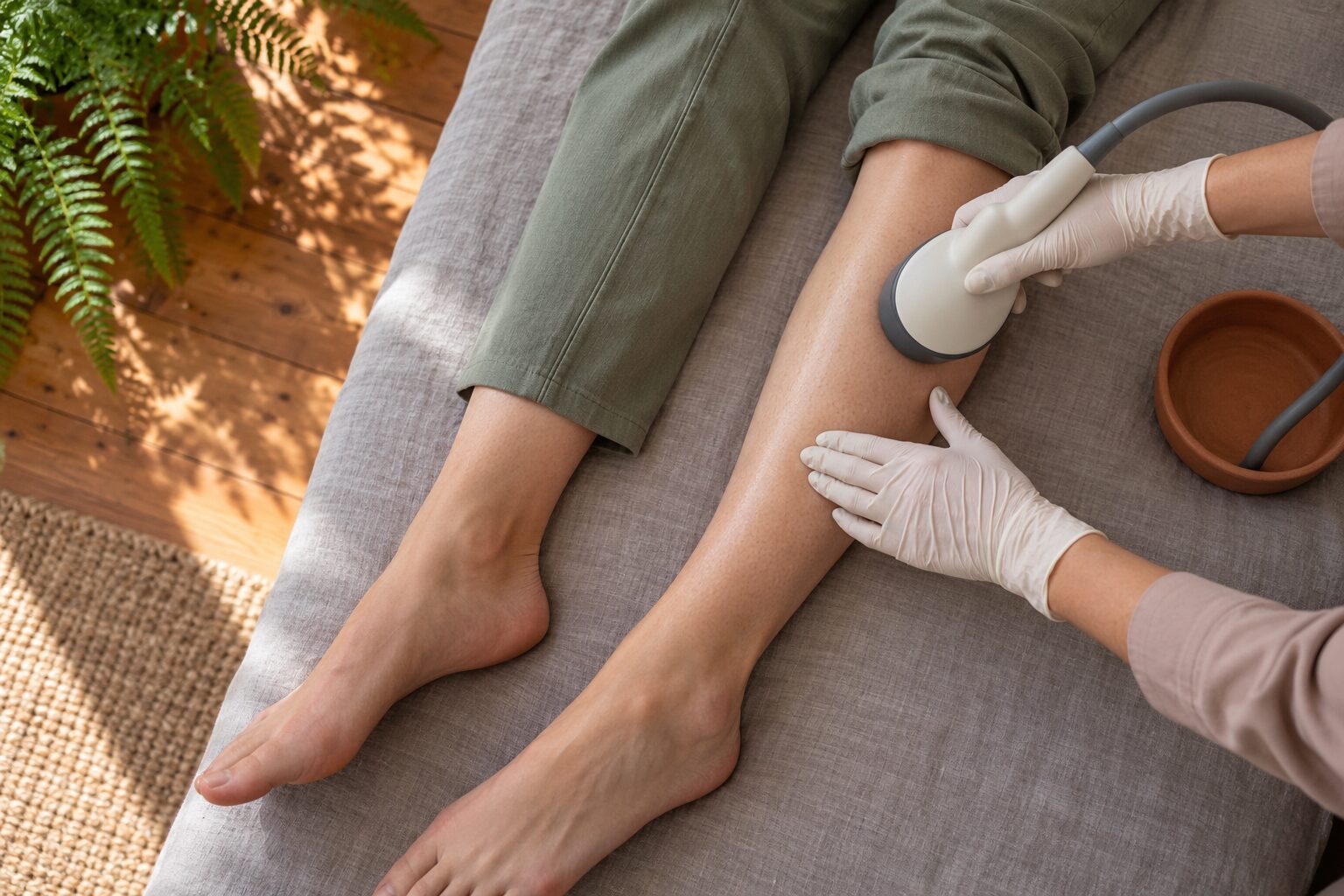
Radiofrequency devices are marketed for tightening loose skin on areas such as the abdomen, arms, and thighs. This page does not rank devices. It shows how to read the claims, which questions can wait for a consultation, and which changes after a session need a call right away. As an independent publication, we sell no devices and give no medical advice about your body.
Start with an independent description
Brand pages describe their own devices. Start instead with a source that has nothing to sell. The PMC article on the use of radiofrequency in aesthetic surgery is a review in a research archive. Read how it describes the method, then compare that wording with the device page you were sent.
What can wait
Planning questions do not need a same-day answer. Bring these to a consultation:
- Which body area you want treated, and what change you expect.
- Whether the provider treats that area often.
- How many sessions the plan includes, and the full cost.
- How the provider will measure change, and what counts as success.
If the plan sounds the same for every person, ask why.
Body skin is not face skin
Settings and expectations for a large body area are a different conversation than for the face. We cannot say how a given device performs on your body. Ask the provider for the settings and plan they would use on you, and ask whether they have records of treating that area. The PMC systematic review of subsurface radiofrequency treatments in plastic surgery shows how researchers examine one branch of this technology. Use it to see what a careful review looks at.
What should not wait
Burns appear among the complications of subsurface radiofrequency treatments in the PMC systematic review linked above, and the PMC article on radiofrequency in aesthetic surgery lists burns and blistering among the side effects of some devices. A burn or blistering after a session calls for a prompt call to the clinic. Before treatment, ask the provider which other changes to your skin do too. If anything frightens you after treatment, call them. If you cannot reach them, or you feel seriously unwell, go to urgent care.
Comparing with other options
Radiofrequency is one of several energy methods. The ASDS page on ultrasound therapy for sagging skin describes a different one. When a provider recommends radiofrequency over ultrasound or the other way around, ask them to explain why in terms of your skin.
What you can do yourself
Follow written aftercare from your provider. Do not apply new treatments or use at-home devices on the area before asking whether they fit your plan.
A practical way to decide
Write down your goals, the device named, the number of sessions, and the contact number for problems. Then compare at least one more provider. For a plain description of an ultrasound treatment that is often discussed alongside radiofrequency, see the Cleveland Clinic page on Ultherapy and note how a neutral source phrases its descriptions.