
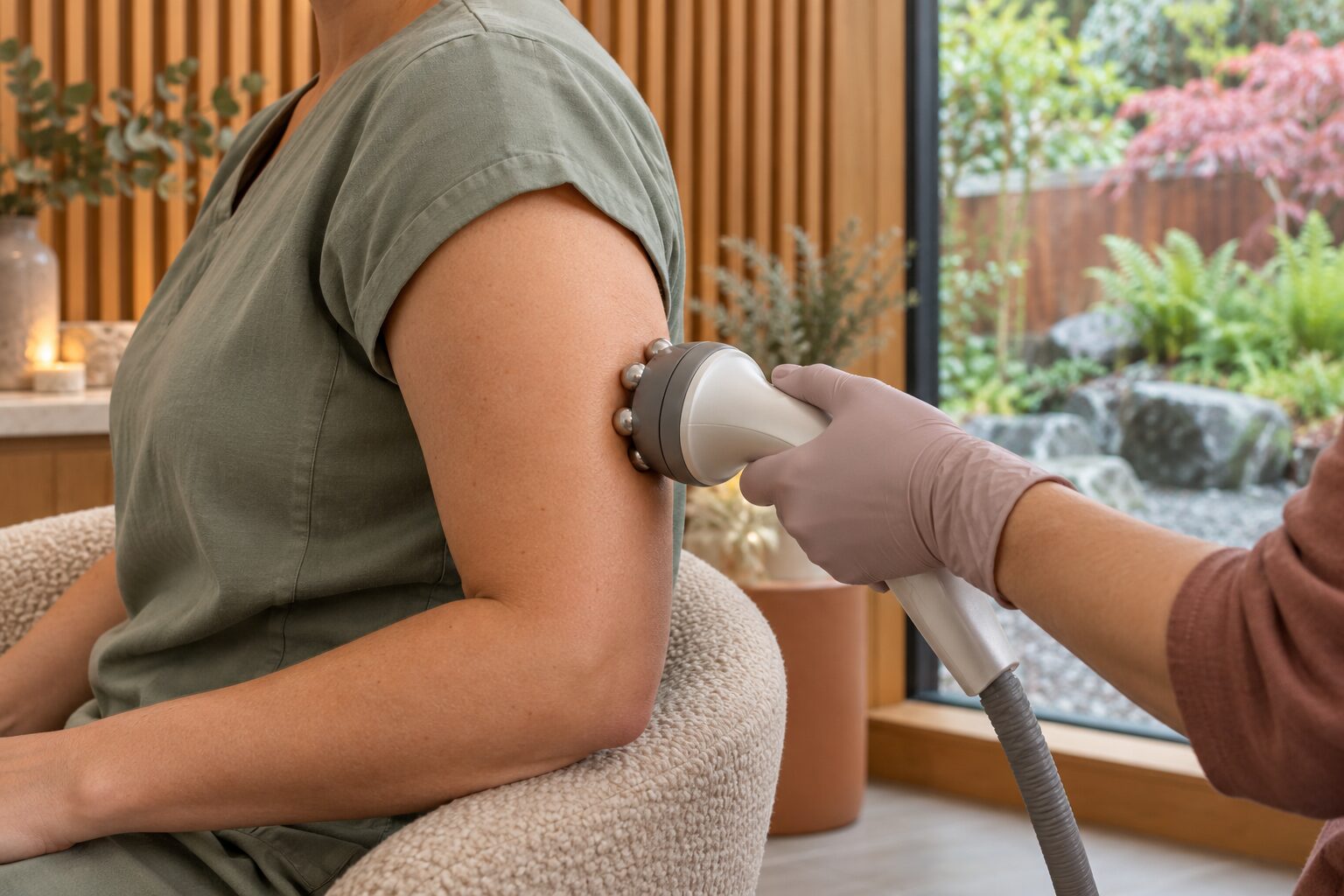
Venus Legacy is a branded radiofrequency device. This page helps you read about it calmly: what questions are cosmetic and can wait, and what changes after a session that should not. It does not promise results. Because this site is independent of Venus Legacy's maker and of every clinic, it gives no medical advice about your skin.
What the name tells you
The word "multipolar" describes a type of radiofrequency applicator. Makers use terms like this to set their device apart from others. The name tells you how the device is described, not how well it will work for you. For an independent overview of radiofrequency used in aesthetic work, read the PMC article on the use of radiofrequency in aesthetic surgery.
What can wait
Planning questions are not urgent, so ask them all before you book:
- Which area is being treated and what the provider expects to change.
- How many visits the plan involves.
- What the provider does to check that you are a suitable candidate.
- What the total cost is, including follow-up visits.
If you are comparing devices, ask the provider to explain the difference in terms of your own skin, not in terms of brand language.
How other tightening methods compare
Radiofrequency sits in a group with ultrasound and other energy-based treatments. The ASDS page on ultrasound therapy for sagging skin describes a neighboring option. Reading it next to the radiofrequency article above helps you see which questions are shared across devices and which are specific to one.
What should not wait
Burns and blistering are among the side effects that the PMC article on radiofrequency in aesthetic surgery, linked above, reports for some radiofrequency devices. If you notice a burn or blistering after treatment, call the clinic right away. Before treatment, ask the provider which other changes to your skin mean you should call. If anything frightens you after treatment, call the clinic. If you cannot reach them or you feel seriously unwell, seek urgent care. Do not wait several days to see whether it improves.
Checking the claims
If the marketing shows photographs, ask whether the provider's before and after photos show their own patients, with the same lighting and angle. For a review that looks at the research on a related group of treatments, see the PMC systematic review of subsurface radiofrequency treatments. Compare its tone with the brand page you are reading.
What you can do yourself
Follow the aftercare sheet your provider gives you, and ask for one in writing if they do not. Avoid adding new skincare products or at-home devices until you have asked the provider whether they fit. This page cannot tell you which ones are safe, because that depends on your skin and your treatment.
A practical way to decide
Treat the choice as two steps. First settle the planning questions at a consultation. Then agree, in advance, who you will call if the skin looks wrong afterward. A provider who answers both clearly is easier to trust than one who talks only about the machine. For a plain description of a neighboring ultrasound treatment, the Cleveland Clinic page on Ultherapy is a useful comparison point.